
Startup India Eligibility Criteria 2026 – Who Can Apply for DPIIT?
A definitive checklist of Startup India eligibility criteria for 2026 — covering entity type, age limits, turnover caps, and the innovation requirement that trips up most applicants.
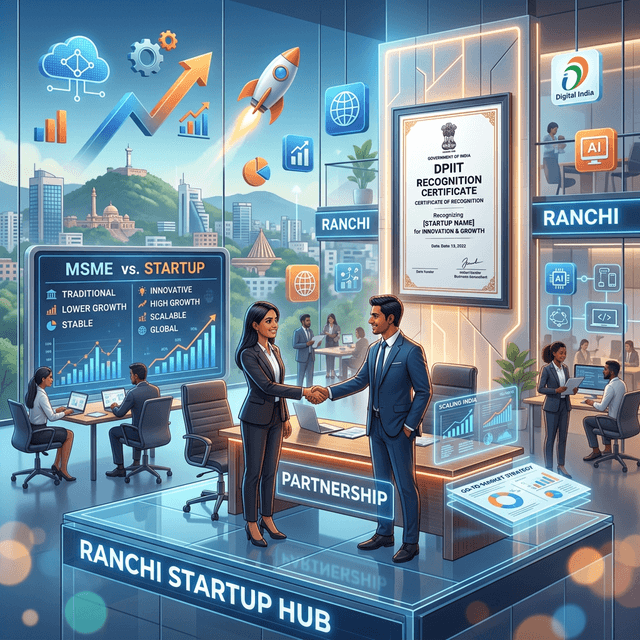
Startup India Eligibility Criteria 2026: The Complete Checklist
Before you begin your DPIIT recognition application, the most important step is verifying that your startup meets all five eligibility criteria. A single disqualifying factor — an incorrect entity type, an entity older than 10 years, or a business formed by splitting an existing company — will result in rejection regardless of how strong your innovation narrative is.
Here is the complete, up-to-date eligibility framework for 2026:
Criterion 1: Entity Type (NON-NEGOTIABLE)
Only the following three entity types are eligible for DPIIT recognition:
- Private Limited Company (Pvt Ltd) — registered under the Companies Act, 2013
- Limited Liability Partnership (LLP) — registered under the LLP Act, 2008
- Registered Partnership Firm — registered under the Indian Partnership Act, 1932
The following are NOT eligible: Sole Proprietorships, One Person Companies (OPC registered before 2022 amendments), Public Limited Companies, Section 8 Companies (NGOs), and HUFs. If you are currently operating as a sole proprietorship and wish to apply, you must first convert to a Pvt Ltd or LLP — a process we help with as part of our pre-registration advisory.
Criterion 2: Age of Business (10-Year Rule)
Your entity must have been incorporated less than 10 years ago from the date of your DPIIT application. This is calculated from the date on your Certificate of Incorporation (COI).
Criterion 3: Turnover Cap (₹100 Crore Limit)
Your startup's annual turnover must not have exceeded ₹100 Crores in any previous financial year. This is a lifetime cap — once you have crossed ₹100 Cr in any single year, you are no longer eligible even if subsequent years are lower. If you are approaching this threshold, apply while you are still eligible. For most early-stage startups, this is not a concern, but rapidly scaling companies should plan their recognition timeline accordingly.
Criterion 4: Originality (Not a Restructured Business)
The startup cannot have been formed by splitting up or reconstructing an existing business. This criterion exists to prevent traditional businesses from rebranding as "startups" to access tax benefits. Specifically:
- A subsidiary incorporated specifically to hive off an existing business line is ineligible.
- A business formed by converting or spitting an existing proprietorship into a Pvt Ltd is ineligible.
- A new entity that is essentially doing the same business as a pre-existing entity under the same promoters may face scrutiny.
Genuinely new ventures — fresh ideas, new products, or new market entries — are fully eligible even if the founders previously ran other businesses.
Criterion 5: Innovation, Scalability, or Employment Generation
This is the most nuanced criterion and the one most commonly misunderstood. DPIIT requires that your startup must be working towards innovation, development, or improvement of products, processes, or services — OR have a scalable business model with high potential for employment generation or wealth creation.
What does "innovation" mean in DPIIT's context?
- Technological innovation: Using technology to solve a problem in a superior way (AI, automation, IoT, software platforms)
- Process innovation: A significantly more efficient or novel way of delivering an existing service
- Product innovation: A new product that addresses an unmet need or significantly improves on existing solutions
- Business model innovation: A fundamentally different economic model that disrupts an existing market
The following business types typically do NOT qualify: generic retail shops, standard real estate brokers, traditional restaurants, generic import-export trading houses, and basic freelancing agencies. These businesses may qualify for MSME registration but not DPIIT recognition.
Quick Eligibility Checklist
✅ You are eligible if:
- ☐ Entity is a Pvt Ltd, LLP, or Registered Partnership
- ☐ Incorporated less than 10 years ago (from today's date)
- ☐ Annual turnover has never exceeded ₹100 Crores
- ☐ Not formed by splitting or reconstructing an existing business
- ☐ Business involves genuine innovation, scalability, or employment generation
What Happens if You're Not Yet Eligible?
If you are currently operating as a sole proprietorship or OPC, the path to eligibility requires converting your entity to a Pvt Ltd or LLP. This process takes 30–60 days and, once done, immediately opens the door to DPIIT recognition. Our advisory team assists with entity conversion as well as subsequent DPIIT filing.
Not sure if you qualify?
Use our free eligibility calculator or speak to our experts for a quick 10-minute eligibility assessment — no commitment required.
Need Expert Guidance?
Don't risk your timeline with guesswork. Let Startup India Experts handle your entire DPIIT Recognition process flawlessly.
Related Articles
Startup India Registration Fees 2026: The Complete Guide
Everything you need to know about the costs associated with Startup India Registration and DPIIT recognition in 2026.
Read ArticleDPIIT Registration Process Step-by-Step (2026 Updated)
A comprehensive, step-by-step walkthrough of the DPIIT recognition process for Indian Startups.
Read Article10 Massive Benefits of Startup India Registration
Discover the exclusive benefits, from 100% tax exemptions to fast-tracked patent filings, unlocked by DPIIT registration.
Read ArticleTop 5 Reasons DPIIT Applications Get Rejected
Avoid the mistakes that cause up to 40% of DPIIT recognition applications to be rejected or put on hold.
Read Article